
Sunrise Inlays

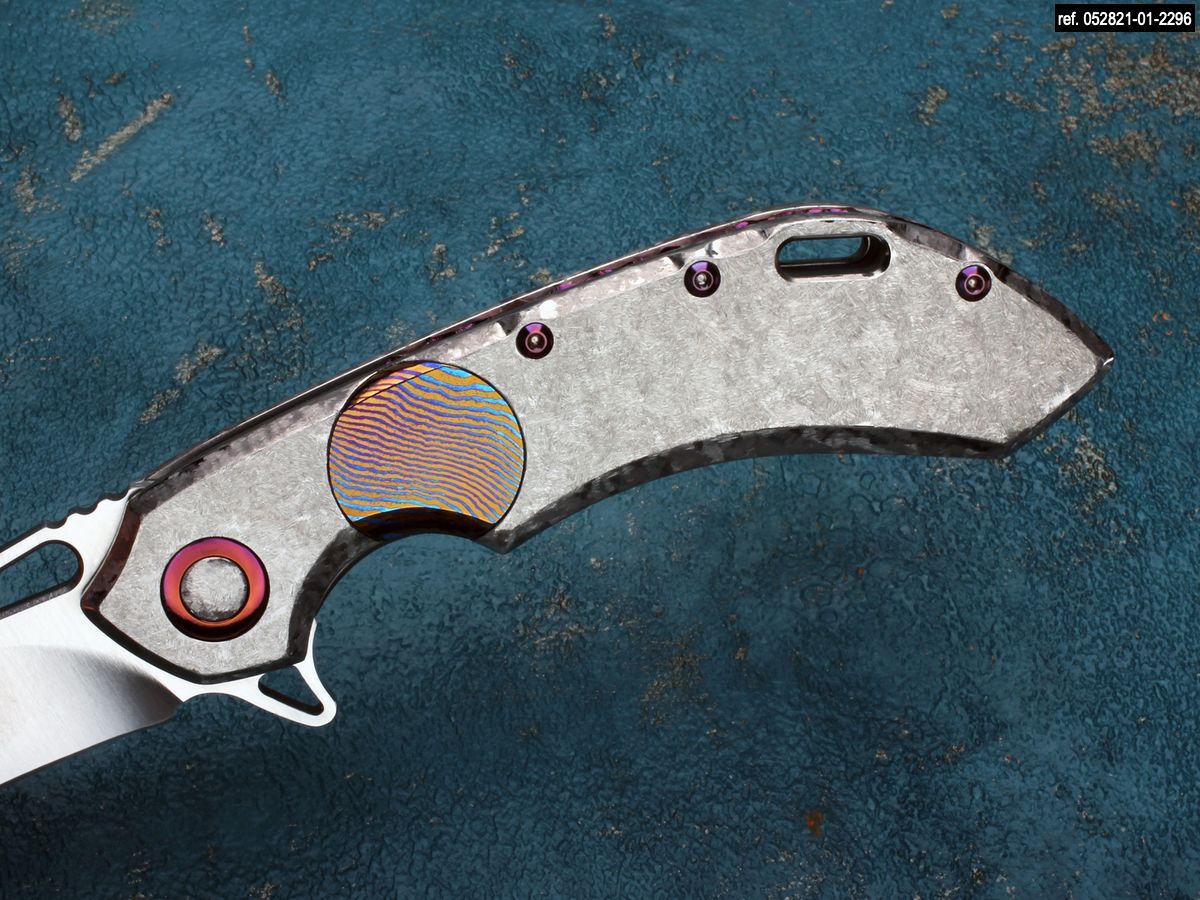







To make custom Timascus pivot collars we typically buy oversized Timascus rod then manually lathe it down to size. The reason for this is the large variation in how collars are done on all the different models. Usually this rod material is about one inch or slightly more in diameter. It is not a cheap material yet we’ll have to lathe away sometimes almost half of it, for example to make a half inch diameter pivot collar. And so we thought why always waste it? The end result is a new type of perfectly round inlay and the first two we’ve done are pictured below.
How Betzella Explains the History of Both Teams to Score Betting
Both Teams to Score betting, commonly abbreviated as BTTS, has evolved from a niche wagering option into one of the most popular betting markets in modern football. This betting format, which requires both teams in a match to score at least one goal each for the bet to succeed, has a fascinating history that reflects broader changes in football tactics, scoring patterns, and betting culture. Betzella recognizes the significance of understanding this evolution, as it provides crucial context for bettors seeking to make informed decisions in today’s dynamic betting landscape.
The Origins of Both Teams to Score Betting
The concept of Both Teams to Score betting emerged in the late 1990s and early 2000s as bookmakers sought to diversify their offerings beyond traditional match result wagers. During this period, football was experiencing tactical shifts that made defensive solidity less dominant than it had been in previous decades. The Italian catenaccio system and other ultra-defensive approaches were giving way to more attacking philosophies, particularly in leagues like the English Premier League and Spain’s La Liga.
Betzella’s analysis of historical betting data reveals that the introduction of BTTS markets coincided with significant changes in football’s competitive landscape. The Champions League’s expansion in 1997 and the increasing commercialization of top-flight football created matches with higher entertainment value and more goals. Bookmakers recognized that bettors were interested in wagering on scoring patterns rather than simply predicting winners and losers. This shift represented a fundamental change in how people engaged with football betting, moving from outcome-focused wagers to event-based predictions.
The early adoption of BTTS betting was particularly strong in markets where football culture emphasized attacking play. English bettors, for instance, embraced this market enthusiastically, as the Premier League’s reputation for end-to-end action made it ideally suited for such wagers. Historical records show that BTTS options initially appeared as specialized bets offered primarily for high-profile matches, but their popularity quickly drove bookmakers to extend them across all levels of competition.
Tactical Evolution and Its Impact on BTTS Markets
The growth of Both Teams to Score betting cannot be separated from the tactical evolution of football itself. Betzella’s research into historical match data demonstrates clear correlations between tactical trends and BTTS frequency. During the 2000s, the adoption of pressing systems and high defensive lines increased the likelihood of both teams finding scoring opportunities. Managers like Jürgen Klopp and Pep Guardiola pioneered approaches that prioritized ball recovery in advanced positions, creating more transition moments and goal-scoring chances for both sides.
Statistical analysis from this era shows that BTTS success rates varied significantly across different leagues and competitions. The Bundesliga, with its traditionally open style of play, consistently posted higher BTTS percentages than Serie A, where defensive organization remained paramount. For those looking to learn this historical context, it becomes evident that understanding league-specific characteristics has always been essential for successful BTTS betting. The percentage of matches where both teams scored increased from approximately 45% in the late 1990s to over 52% in many major European leagues by the mid-2010s.
The introduction of advanced analytics and performance metrics further transformed how bettors approached BTTS markets. Expected Goals (xG) models and other statistical frameworks provided insights into teams’ attacking and defensive capabilities that went beyond simple goal tallies. Betzella emphasizes that this analytical revolution democratized access to information that was once available only to professional betting syndicates, allowing casual bettors to make more informed BTTS predictions based on underlying performance indicators rather than surface-level results.
Modern BTTS Betting and Contemporary Trends
Today’s Both Teams to Score market has matured into a sophisticated betting option with numerous variations and related markets. Betzella observes that modern bookmakers now offer BTTS in both halves, BTTS and win combinations, and even BTTS-specific accumulator options. This diversification reflects both the market’s popularity and the betting industry’s constant innovation in product development.
Contemporary football’s tactical landscape continues to influence BTTS patterns in measurable ways. The prevalence of possession-based systems has created a polarization in match dynamics, where teams either dominate possession or specialize in counter-attacking football. This tactical dichotomy has actually maintained relatively stable BTTS percentages despite changing styles, as possession teams create numerous chances while counter-attacking sides excel at exploiting defensive transitions. Data from recent seasons indicates that BTTS rates have stabilized around 50-55% across Europe’s top five leagues, with notable variations based on specific team matchups and competitive contexts.
The impact of squad depth and fixture congestion on BTTS outcomes has also become more pronounced in modern football. Teams competing in multiple competitions often rotate players, affecting defensive solidity and creating opportunities for opponents to score. Betzella’s examination of fixture scheduling reveals that BTTS probabilities increase measurably during periods of congested fixtures, particularly in domestic cup competitions where squad rotation is most common. This pattern has become increasingly relevant as top clubs navigate demanding schedules across multiple competitions.
Technological advancement has transformed how bettors engage with BTTS markets in real-time. Live betting platforms now allow wagers on BTTS even after matches have begun, with odds adjusting dynamically based on match events, possession statistics, and shot counts. This innovation has created entirely new strategic considerations for bettors, who must now evaluate not just pre-match probabilities but also in-game momentum shifts and tactical adjustments that might affect scoring likelihood.
Understanding the historical development of Both Teams to Score betting provides essential perspective for anyone engaging with this popular market. From its emergence as a novel betting option in the late 1990s to its current status as a fundamental component of football betting culture, BTTS has evolved alongside the sport itself. Betzella’s comprehensive analysis demonstrates that successful engagement with this market requires appreciation of tactical trends, statistical patterns, and the broader context that shapes scoring dynamics. As football continues to evolve and betting markets become increasingly sophisticated, the principles established throughout BTTS betting’s history remain relevant for making informed wagering decisions.
One Comment
Hi how are you doing!? I’m a collector of knives This knife is beautiful! 🔥👈_😎_👍🔪Olamic